Research Article
2Assistant Professor of Zoology, Department of Botany, St. Joseph’s College (Autonomous), Tiruchirappalli, Tamilnadu, India.
Corresponding author: Mr. J. Jaydish | Email: jaydishkennedy@gmail.com
1. Introduction
One of the most basic, and highly essential methods in botanical and ecological studies is floristic inventories. Systematic records of the lady flora have useful data on taxonomy, conservation biology, vegetation ecology, environmental assessment, ecosystem management, and sustainable use of natural resources. Floristic work aids in determining the richness, distribution and endemism of species, at any given area; ecological association among species and their environment (Gamble and Fischer, 1915-1936). In addition, plant checklists can be used as a basis dataset to monitor ecological shifts that occurs due to climate change, habitats fragmentation, human intrusions, biological invasions, and land-use alterations. These inventories are necessary in the realization of useful conservation plans and sustainable existence of biodiversity-abundant ecosystems in the long-term (Nayar et al., 2014). India is considered as one of the megadiverse countries of the world that carry an immense number of plant species on its head under the influence of the diverse climatic conditions, topological differences, and ecological heterogeneity. The subcontinent of India is a habitat of rich diversities with a variety of ecosystems such as tropical rainforests, dry deciduous forests, alpine meadows, mangroves, grasslands and coastal ecosystems (Ahmedullah & Nayar, 1987). Such heterogeneous environmental conditions have led to the development and maintenance of rich floristic heritage. The Western Ghats take center stage within the biodiversity rich regions of India due to their outstanding level of species, high endemism as well as ecological value (Pascal, 1988).
The Western Ghats is a stretch along the western coast of the peninsular India, reputed with the world as being one of the thirty-six biodiversity hotspots of the world. The mountain chain contains 6 states in India and forms a very huge diversity of flora and fauna (Myers et al., 2000). The area has a rich flora with thousands of plant species with many being endemic and confined to a particular ecological niche. The development of a diverse vegetation type and special habitats have taken place due to the unique geological history, altitudinal gradients, and topography, and monsoonal climatic conditions of the Western Ghats (Myers, 1988). Due to its excellent ecological quality and impressive biological diversity, a number of places in the Western Ghats have been considered as UNESCO World Heritage Sites. The Megamalai Hills are an ecologically important mountainous terrain in the southern region of the Western Ghats in the Theni District of Tamil Nadu. Also known as the High Wavy Mountains, Megamalai is a component of a greater Periyar landscape and a vital aspect of the Western Ghats ecosystem.
The topography is distinguished by wavy land forms, relative heights, and high rainfall and appropriate climatic conditions that facilitate plant life of all kinds (Daniels, 2003). Some of the ecological heterogeneities of the landscape include evergreen forests, semi evergreen forests, moist deciduous forests, montane grasslands, riparian habitats, and plantation ecosystems. Megamalai Wildlife Sanctuary is vital in terms of preserving a biodiversity and ecological equilibrium in the region (Davidar et al., 2010). The sanctuary serves as a central watershed which sustains a number of perennial streams and river systems which supply water resources to the regions in the surroundings. Moreover, the region provides a crucial wildlife pathway between neighboring existing conserved zones and movement within the region of different animal species (Ramesh et al., 2010). The wide range of habitats present in Megamalai hosts many endemic, threatened, rare and medicinally valuable plant taxa, giving the area a high conservation importance. Ecological complexity and species richness are also boosted by the availability of heterogenous microclimatic conditions and habitat types ((Magurran, 2004). Although ecologically essential, detailed flora studies of various areas of Megamalai are deficient. The previous botanical studies work on the southern Western Ghats has merely been based on taxonomic revisions and species descriptions as well as on medicinal plant resources, vegetation studies and ecological research (Krebs, 1999).
In spite of the contribution these studies have made towards the knowledge of the biodiversity of the regions, more current and locality-based floristic inventories are still needed. They should constantly record the diversity of the vegetation since the vegetation structure can vary with time as a result of ecological processes and the rise of anthropogenic factors. Over the last few decades, most forest ecosystems in the Western Ghats have been impacted more as human activities continued to increase including plantation farming, infrastructure development, tourism, habitat modification and spread of invasive alien species (Kent, 2012). Such pressures can change the composition of the species, decrease the quality of habitats and endanger the native biodiversity. In turn, systematic floristic surveys will be required to determine conservation priorities, assess the health of the ecosystem, and provide the scientific data during managerial and restoration programs. Properly documented plant catalogs may also be valuable in future research studies involving vegetation dynamics, ecological surveillance, climate change and how to deal with the biosphere and maintain biodiversity sustainably (Simpson, 1949). Thus, the floristic diversity of the chosen localities in the Megamalai Hills was recorded in the current study to develop a preliminary checklist of the vascular flora. The study is intended to give baseline botanical data that will form a point of basis in future research, biodiversity measurements, conservation planning and ecological management of this ecologically sensitive area of the southern Western Ghats (Shannon and Weaver, 1949). The aims of the current research were: Aim: 1. To record plant diversity of vascular plants in Megamalai Hills. 2. To compile a preliminary list of plant species. 3. To examine family and habit distribution of species. 4. To discover ecologically and medically significant taxa. 5. To be able to offer baseline information on future biodiversity and conservation research.
2. Study Area
Megamalai Hills are located in the Tamil Nadu Theni district of the western ghats in the south part of the Ghats. The area is also topographically described as being undulated, wooded, and it has valleys, streams, and plateau. The altitude in the study area is highly variable, which provides a variety of climatic and ecological conditions. Megamalai is mainly tropical montane with moderate to heavy rainfall caused by southwest and northeast monsoons climate. Change of temperature along elevation gradient leads to occurrence of heterogeneous pattern of vegetation. The vegetation type of the area consists of tropical evergreen forests, semi-evergreen forests, moist deciduous forests, montane grasslands, riparian vegetation, and ecosystems of plantations. Such habitats sustain a variety of assemblage of herbs, shrubs, climbers, epiphytes, trees. Megamalai has major ecological implications in the hydrological stability, soil conservation and continuity of wildlife habitats in the southern Western Ghats landscape (Figure 1).
Some of the vegetation types that were seen in the area are:
- Tropical evergreen forests
- Semi-evergreen forests
- Moist deciduous forests
- Montane grasslands
- Riparian vegetation
- Plantation-associated vegetation
High species richness and specialization in habitat are enhanced by the ecologically rich site of Megamalai.
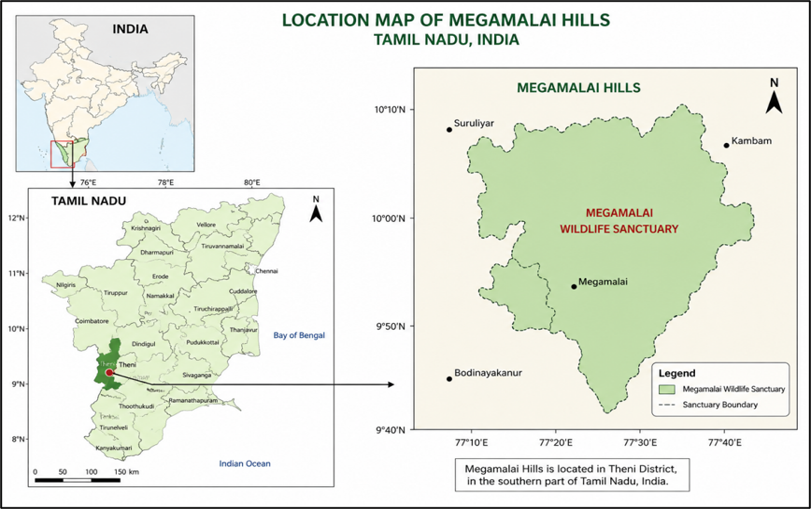
Figure 1: Geographic location of the study area (Megamalai Hills) in Theni District, Tamil Nadu, India.
3. Materials and Methods
3.1. Field Survey and Plant Documentation
Extensive floristic surveys were conducted across various ecological habitats of Megamalai Wildlife Sanctuary in the southern Western Ghats. Field investigations were carried out in different seasons to maximize the documentation of flowering and fruiting plant species (Bhaskar, 2012). and to capture seasonal variations in vegetation composition (Figure 2-4).
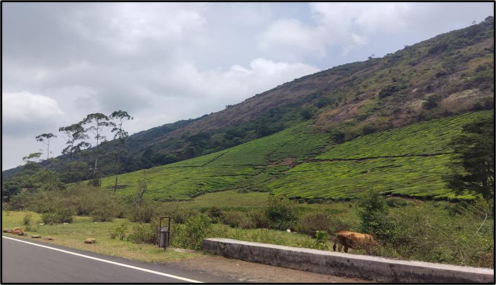
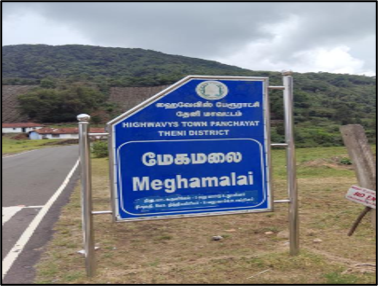
Figure 2 Figure 3
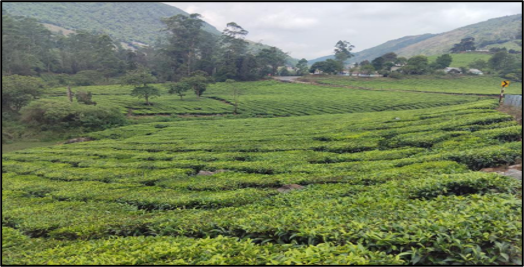
Figure 4
Figure 2-4: Entrance signboard and Panoramic view of Megamalai region
The survey included various types of habitats such as:
- Evergreen forest interiors
- Semi-evergreen forest patches
- Hill slopes
Stream and river sides.
- Montane grasslands
- Moist valleys
- Plantation fringes
- Disturbed roadside vegetation
The plant taxa were recorded and recorded using direct field notes, photographs and unintentional collection techniques. During field visits, species with distinguishable morphological or ecological features were keenly documented. Taxonomic verification of photographs of vegetative and reproductive structures including leaves, flowers, fruits, bark and inflorescences was taken and used in the future as a reference (Whittaker, 1972).
The provided specimens were identified with the aid of the standard taxonomic literature such as regional, monographs, and herbarium. Authenticated botanical databases and nomenclatural resources were used to perform taxonomic verification (Figure 2-4).
Field Observation Details:
- Location: Megamalai Hills, Theni District, Tamil Nadu, India
- Date of Observation: 05 May 2026
- Time: 11:48 AM (IST)
- Region: Southern Western Ghats
- State: Tamil Nadu
- Country: India
- Elevation: Approximately 1,000–1,600 m above mean sea level
- Habitat Type: Roadside vegetation adjoining evergreen forest ecosystem
- Vegetation Type: Tropical Evergreen / Semi-evergreen Forest Landscape
- Climate: Tropical montane climate
- Weather Condition: Daytime, clear sky with moderate sunlight
- Survey Method: Direct field observation and photographic documentation
- Purpose of Survey: Documentation of vascular plant diversity and endemic flora
- Research Area: Megamalai Wildlife Landscape, Southern Western Ghats Biodiversity Hotspot

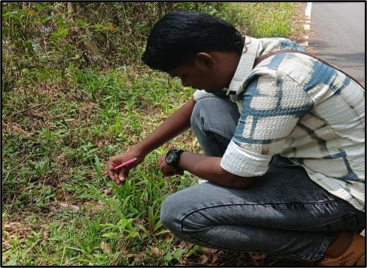
Figure 5 Figure 6
Figure 5-6: Field observation and in situ documentation of plant diversity during floristic surveys conducted in Megamalai Hills, Tamil Nadu.
The following taxonomic resources were utilized for species verification:
- Regional floras of the Western Ghats
- Herbarium specimens and botanical monographs
- Plants of the World Online
- World Flora Online
Scientific names, author citations, and family classifications were standardized according to currently accepted botanical nomenclature.
3.2. Data Classification
Systematic classification was conducted on the documented species of plants so that they could be interpreted using floristic and ecological values. The classification was done using:
- Family
- Genus
- Growth habit
- Habitat preference
- Ecological significance
- Endemism status
- Medicinal importance
Classification of growth habit was conducted to have an insight into the vegetation structure and species distribution patterns in the study area (Joseph, 1987). The flora was classified into the following:
- Trees
- Shrubs
- Herbs
- Climbers
- Epiphytes
Particular focus was put on the endemic taxa that are limited to the southwestern part of the Ghats. There were also ecologically sensitive and habitat-specific species which were identified during the classification process.
In the ethnobotanical practice; medicinally important plants were traditionally written separately on the basis of the literature available and field observations.
3.3. Diversity Analysis
P Standard biodiversity assessment methods that are mostly used in vegetation ecology and floristic studies were used to evaluate floristic composition, species richness and family dominance (Sathish Kumar & Manilal, 1994). Species richness was defined by the total number of taxa that were recorded in the survey. The family dominance was compared in terms of the number of species represented in each family. The diversity indices were taken in order to determine vegetation heterogeneity and distribution patterns.
Shannon Diversity Index
H′=−∑pi ln pi
Where: H′ = Shannon diversity index; pi = Proportion of individuals belonging to the ith species.
The Shannon index is widely used for evaluating species diversity and ecological complexity within plant communities.
Simpson Diversity Index
D =1−∑pi2
Where: D = Simpson diversity index; pi = Relative abundance of each species.
The Simpson index provides information regarding species dominance and probability distribution within ecological communities ((Manickam & Irudayaraj, 1992). These biodiversity indices are useful for understanding vegetation heterogeneity, species richness, and ecological stability across different habitats of Megamalai Hills.
4. Results
4.1. Floristic Composition
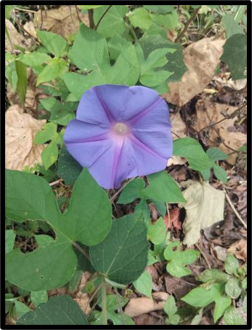
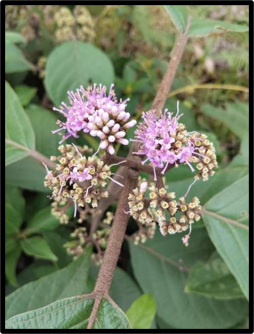
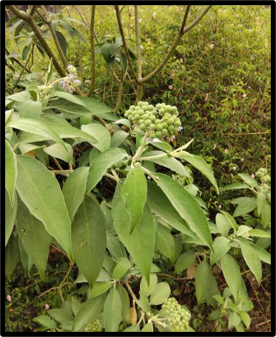
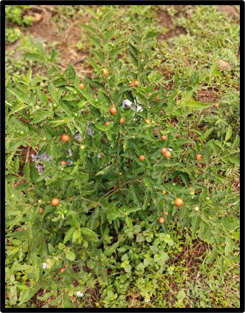
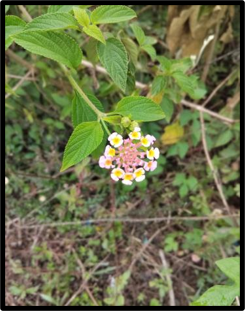
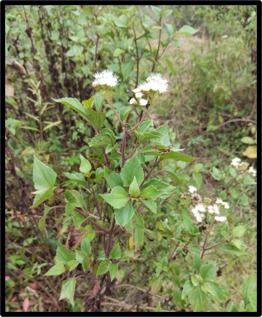
The current floristic survey of recognition indicated all 105 plant taxa that were found in various angiosperm families across the Megamalai landscape. A large variety of growth was recorded (herbs, shrubs, vines, epiphytes and trees) related to evergreen woodland, and montane ecosystems (see Figure 7A-7F).
7A 7B 7C
7D 7E 7F
Figure 7A-7F: Representative plant species recorded during the floristic survey conducted at Megamalai, Theni District, Tamil Nadu, India. (7A) Ipomoea purpurea (L.) Roth, (7B) Clerodendrum infortunatum L., (7C) Callicarpa tomentosa (L.) L., (7D) Solanum torvum Sw., (7E) Lantana camara L., and (7F) Ageratina adenophora (Spreng.)
There was a high level of ecological heterogeneity in vegetation of Megamalai depending on the factors of altitude, rainfall, humidity, variation in slope, and habitat diversity. The moist valleys and greater species richness was observed using evergreen forest interior and those in the damp southern valleys; in balsams, orchids, or understorey shrubs.
According to the floristic checklist, the high representation of endemic and habitat-specific taxa that are typical of the southern Western Ghats was evident. Some of the species recorded in the research have limited geographical ranges, and are ecologically sensitive species. The presence of a variety of angiosperm families in the study area supports the fact that Megamalai Hills is a valuable biodiversity repository in the state of Tamil Nadu.
4.2. Dominant Plant Families
The highest species richness was observed in the family of Balsaminaceae, which was among the taxa recorded, because of the wide distribution of the genus Impatiens. The preponderance of balsams in the area indicates the wet weather conditions, low-lying areas and moist soil conditions characteristic of the montane ecologies.
There was also a high level of diversity in the family Rubiaceae with genera Lasianthus, Pavetta, Ixora, Psychotria and Hedyotis. Rubiaceae were mainly found in understorey of evergreen forests and wet environments.
Another ecologically important family in the study area was Orchidaceae. The orchid taxi were primarily epiphytes and lithophytes found in the moist forest ecosystems which were featured by the stable micro climatic conditions (Table 1). Celastraceae and Melastomataceae were also represented well with a significant contribution to the floristic diversity of Megamalai.
Major Dominant Families Recorded
Table 1: Major Dominant Families in Megamalai

The dominance of these families reflects the tropical montane climatic conditions and ecological complexity of the Megamalai landscape.
4.3. Diversity of Balsams (Impatiens)
The genus Impatiens showed high species diversity in the study area and was the most dominant floral element of the observed taxa. Many Guilds were recorded during the survey such as Impatiens acaulis, I. campanulata, I. clavicornu, I. cuspidata, I. elegans, I. grandis, I. latifolia, I. leschenaultii, I. munnarensis, I. rosea, and I. tomentosa. The majority of balsams species were found on dark shaded hill slopes, stream edges, and forest openings and in evergreen understories. The presence of a few habitat-specific and endemic balsams suggests ecological sensitivity of the montane habitats in Megamalai. The richness and heterogeneity of the Impatiens species indicate good environmental conditions such as-
- High humidity
- Moderate temperature
- Seasonal rainfall
- Moist soil conditions
- Dense canopy cover
The genus is a valuable ecological indicator of unaltered montane forest ecosystems in the southern Western Ghats.
4.4. Orchid Diversity
Several ecologically significant genera such as: represented the orchid diversity within Megamalai Hills.
- Bulbophyllum
- Dendrobium
- Eria
- Habenaria
- Oberonia
Evergreen forest ecosystems and epiphytic habitats in relation to moist microclimatic conditions showed the occurrence of such species like Bulbophyllum aureoflavum and Eria pseudoclavicaulis.
The vast majority of orchid taxa were epiphytes on tree trunks and tree branches in areas untouched by fire. Some species were also seen in lithophytic areas of moist rocky surface.
Both the richness of vegetation in orchids and the fact that the vegetation is orchid-rich show:
- Stable humidity conditions
- Well-preserved evergreen forests
- High atmospheric moisture
- Ecological stability
Orchids are regarded as delicate keys to changes in the environment and disruptions to habitats. Their presence in Megamalai demonstrates the ecological significance and conservation importance of the area.
4.5. Endemic and Ecologically Important Species
A number of endemic and conservation important taxa found in the southern Western Ghats had been captured in the current study. These species have limited geographical distribution and also play a very significant role in floristic uniqueness of Megamalai Hills.Important endemic taxa recorded include:
- Elaeocarpus gaussenii
- Nothopegia vajravelui
- Schefflera maduraiensis
- Syzygium travancoricum
- Sonerila pulneyensis
- Hedyotis rajasekaranii
The occurrence of these endemic species reflects the role of Megamalai as an important center of plant endemism within the Western Ghats biodiversity hotspot.
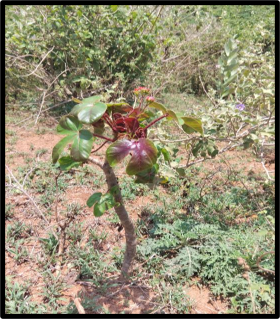
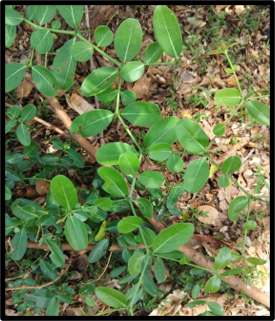
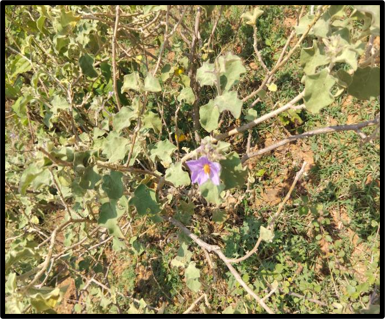
Figure 8A Figure 8B Figure 8C
Figure 8A-8C: Ecologically Important Species of Megamalai (8A) Carissa spinarum L.(8B) Jatropha gossypiifolia L.(8C) Solanum incanum L.
Several endemic taxa were associated with evergreen forest interiors and moist valleys, indicating the ecological significance of undisturbed habitats for species survival.
The documentation of ecologically important taxa provides valuable baseline information for:
- Biodiversity conservation
- Habitat restoration
- Ecological monitoring
- Conservation prioritization
4.6. Medicinally Important Plants
Most of the plant taxa that were identified in the course of study have medicinal and ethnobotanical value. They are species that have been traditionally used in indigenous medicine to treat a variety of ailments.
Some of the taxa recorded in the survey that are medically important are:
- Garcinia travancorica
- Ehretia wightiana
- Psychotria nudiflora
- Lasianthus dichotomus
Such taxa can have possible pharmacological value in the presence of bioactive compounds. The future existence of medicinal plants species in the natural ecosystems is vital to the conservation of the traditional knowledge systems as well as future phytochemical studies.
The presence of the medicinally important taxa further highlights the ecological and socio-economic significance of Megamalai Hills.
4.7. Floristic Composition of Megamalai Hills
The total number of the vascular taxa included in the present study are 105 taxa (30 families and 58 genera) of plants in different habitats of Megamalai Hills in the southern Western Ghats. The documented flora covered a wide range of diverse growth forms such as trees, shrubs, herbs, vines, epiphytes which were found in the evergreen forests, streams, damp valleys, and montane units. The taxa represented in the records included herbaceous species which comprised of a substantial proportion of all the observed flora, due to the conducive climatic factors and heterogeneity of habitat of the area. The abundance of flora present in Megamalai underscores its ecological worth as a significant hub of plant diffusion to the rich Western Ghats biodiversity hot spot.
Family-wise analysis showed that the most dominant family was Balsaminaceae with many species of Impatiens followed by Rubiaceae, Orchidaceae, Melastomataceae, Symplocaceae, and Celastraceae. Some of the species observed in the survey, such as Elaeocarpus gaussenii, Nothopegia vajravelui, Syzygium travancoricum, and Schefflera maduraiensis are endemic to the southern Western Ghats and have a significant conservation value. Endemicity, existence of medicinally valuable, and habitat-specific taxa demonstrate that the Megamalai is an ecological peculiarity, and that further biodiversity surveys and conservation actions are necessary in this ecologically vulnerable area (Table 2).
Table 2: Annotated Checklist of Endemic Plant Species Collected from Megamalai, Western Ghats.
|
S.no |
Scientific name |
Common name |
Family name |
|
1. |
Elaeocarpus gaussenii |
Gaussen’s Elaeocarpus |
Elaeocarpaceae |
|
2. |
Nothopegia vajravelui |
Vajravelu Nothopegia |
Anacardiaceae |
|
3. |
Memecylon flavescens |
Yellow Memecylon |
Melastomataceae |
|
4. |
Symplocos oligandra |
Oligandra Sweetleaf |
Symplocaceae |
|
5. |
Symplocos wynadense |
Wynad Sweetleaf |
Symplocaceae |
|
6. |
Meiogyne ramarowii |
Ramarow’s Meiogyne |
Annonaceae |
|
7. |
Garcinia travancorica |
Travancore Garcinia |
Clusiaceae |
|
8. |
Microtropis stocksii |
Stocks Microtropis |
Celastraceae |
|
9. |
Ehretia wightiana |
Wight’s Ehretia |
Boraginaceae |
|
10. |
Euonymus crenulatus |
Crenulate Spindle Tree |
Celastraceae |
|
11. |
Monosis travancorica (Helicia travancorica) |
Travancore Helicia |
Proteaceae |
|
12. |
Schefflera maduraiensis |
Madurai Schefflera |
Araliaceae |
|
13. |
Psychotria nudiflora |
Naked-flowered Psychotria |
Rubiaceae |
|
14. |
Lasianthus dichotomus |
Dichotomous Lasianthus |
Rubiaceae |
|
15. |
Pavetta oblanceolata |
Oblanceolate Pavetta |
Rubiaceae |
|
16. |
Impatiens acaulis |
Stemless Balsam |
Balsaminaceae |
|
17. |
Impatiens campanulata |
Bell-shaped Balsam |
Balsaminaceae |
|
18. |
Impatiens clavicornu |
Club-horned Balsam |
Balsaminaceae |
|
19. |
Impatiens cordata |
Heart-leaved Balsam |
Balsaminaceae |
|
20. |
Impatiens cuspidata |
Pointed Balsam |
Balsaminaceae |
|
21. |
Impatiens dasysperma |
Hairy-seeded Balsam |
Balsaminaceae |
|
22. |
Impatiens elegans |
Elegant Balsam |
Balsaminaceae |
|
23. |
Impatiens flaccida |
Drooping Balsam |
Balsaminaceae |
|
24. |
Impatiens floribunda |
Many-flowered Balsam |
Balsaminaceae |
|
25. |
Impatiens goughii |
Gough’s Balsam |
Balsaminaceae |
|
26. |
Impatiens grandis |
Giant Balsam |
Balsaminaceae |
|
27. |
Impatiens henslowiana |
Henslow’s Balsam |
Balsaminaceae |
|
28. |
Impatiens herbicola |
Herb-loving Balsam |
Balsaminaceae |
|
29. |
Impatiens inconspicua |
Inconspicuous Balsam |
Balsaminaceae |
|
30. |
Impatiens latifolia |
Broad-leaved Balsam |
Balsaminaceae |
|
31. |
Impatiens leschenaultii |
Leschenault’s Balsam |
Balsaminaceae |
|
32. |
Impatiens maculata |
Spotted Balsam |
Balsaminaceae |
|
33. |
Impatiens minae |
Mina’s Balsam |
Balsaminaceae |
|
34. |
Impatiens minor |
Small Balsam |
Balsaminaceae |
|
35. |
Impatiens modesta |
Modest Balsam |
Balsaminaceae |
|
36. |
Impatiens munnarensis |
Munnar Balsam |
Balsaminaceae |
|
37. |
Impatiens omissa |
Omitted Balsam |
Balsaminaceae |
|
38. |
Impatiens oppositifolia |
Opposite-leaved Balsam |
Balsaminaceae |
|
39. |
Impatiens parasitica |
Epiphytic Balsam |
Balsaminaceae |
|
40. |
Impatiens parvifolia |
Small-leaved Balsam |
Balsaminaceae |
|
41. |
Impatiens scapiflora |
Scape-flowered Balsam |
Balsaminaceae |
|
42. |
Impatiens rosea |
Rose-coloured Balsam |
Balsaminaceae |
|
43. |
Impatiens verticillata |
Whorled Balsam |
Balsaminaceae |
|
44. |
Impatiens viscosa |
Sticky Balsam |
Balsaminaceae |
|
45. |
Impatiens tomentosa |
Hairy Balsam |
Balsaminaceae |
|
46. |
Bulbophyllum aureoflavum |
Golden-yellow Bulbophyllum Orchid |
Orchidaceae |
|
47. |
Eria pseudoclavicaulis |
False-club Eria Orchid |
Orchidaceae |
|
48. |
Habenaria spp. |
Rein Orchids |
Orchidaceae |
|
49. |
Bulbophyllum spp. |
Bulbophyllum Orchids |
Orchidaceae |
|
50. |
Oberonia spp. |
Fairy Orchids |
Orchidaceae |
|
51. |
Dendrobium spp. |
Dendrobium Orchids |
Orchidaceae |
|
52. |
Hedyotis rajasekaranii |
Rajasekaran’s Hedyotis |
Rubiaceae |
|
53. |
Hedyotis shettyi |
Shetty’s Hedyotis |
Rubiaceae |
|
54. |
Ixora johnsonii |
Johnson’s Ixora |
Rubiaceae |
|
55. |
Ixora monticola |
Mountain Ixora |
Rubiaceae |
|
56. |
Ixora saulierei |
Sauliere’s Ixora |
Rubiaceae |
|
57. |
Lasianthus acuminatus |
Pointed Lasianthus |
Rubiaceae |
|
58. |
Ophiorrhiza brunonis |
Brunon’s Snake-root Herb |
Rubiaceae |
|
59. |
Sonerila parameswaranii |
Parameswaran’s Sonerila |
Melastomataceae |
|
60. |
Sonerila pulneyensis |
Pulney Sonerila |
Melastomataceae |
|
61. |
Osbeckia spp. |
Osbeckia / Melastome |
Melastomataceae |
|
62. |
Syzygium travancoricum |
Travancore Jamun |
Myrtaceae |
|
63. |
Symplocos anamallayana |
Anaimalai Sweetleaf |
Symplocaceae |
|
64. |
Anaphalis beddomei |
Beddome’s Pearly Everlasting |
Asteraceae |
|
65. |
Euonymus angulatus |
Angular Spindle Tree |
Celastraceae |
|
66. |
Palaquium ellipticum |
Indian Butter Tree |
Sapotaceae |
|
67. |
Cullenia exarillata |
Cullenia Tree |
Malvaceae |
|
68. |
Mesua ferrea |
Ceylon Ironwood |
Calophyllaceae |
|
69. |
Hopea parviflora |
Small-flowered Hopea |
Dipterocarpaceae |
|
70. |
Vateria indica |
White Dammar Tree |
Dipterocarpaceae |
|
71. |
Calophyllum tomentosum |
Wild Alexandrian Laurel |
Calophyllaceae |
|
72. |
Persea macrantha |
Wild Avocado |
Lauraceae |
|
73. |
Litsea floribunda |
Litsea Tree |
Lauraceae |
|
74. |
Litsea stocksii |
Stocks Litsea |
Lauraceae |
|
75. |
Phoebe lanceolata |
Lance-leaved Phoebe |
Lauraceae |
|
76. |
Actinodaphne malabarica |
Malabar Actinodaphne |
Lauraceae |
|
77. |
Cinnamomum malabatrum |
Malabar Cinnamon |
Lauraceae |
|
78. |
Magnolia nilagirica |
Nilgiri Magnolia |
Magnoliaceae |
|
79. |
Myristica malabarica |
Malabar Nutmeg |
Myristicaceae |
|
80. |
Knema attenuata |
Wild Nutmeg |
Myristicaceae |
|
81. |
Holigarna arnottiana |
Black Varnish Tree |
Anacardiaceae |
|
82. |
Semecarpus travancorica |
Travancore Marking Nut |
Anacardiaceae |
|
83. |
Aglaia elaeagnoidea |
Priyangu Tree |
Meliaceae |
|
84. |
Dysoxylum malabaricum |
Malabar Mahogany |
Meliaceae |
|
85. |
Toona ciliata |
Red Cedar |
Meliaceae |
|
86. |
Canarium strictum |
Black Dammar |
Burseraceae |
|
87. |
Aporosa lindleyana |
Aporosa Tree |
Phyllanthaceae |
|
88. |
Mallotus philippensis |
Kamala Tree |
Euphorbiaceae |
|
89. |
Macaranga peltata |
Parasol Leaf Tree |
Euphorbiaceae |
|
90. |
Bridelia retusa |
Spinous Kino Tree |
Phyllanthaceae |
|
91. |
Drypetes elata |
Drypetes Tree |
Putranjivaceae |
|
92. |
Terminalia bellirica |
Beleric Myrobalan |
Combretaceae |
|
93. |
Terminalia chebula |
Chebulic Myrobalan |
Combretaceae |
|
94. |
Terminalia paniculata |
Kindal Tree |
Combretaceae |
|
95. |
Lagerstroemia microcarpa |
Crape Myrtle |
Lythraceae |
|
96. |
Syzygium densiflorum |
Dense-flowered Jamun |
Myrtaceae |
|
97. |
Syzygium gardneri |
Gardner's Jamun |
Myrtaceae |
|
98. |
Memecylon umbellatum |
Ironwood Shrub |
Melastomataceae |
|
99. |
Ardisia solanacea |
Ardisia |
Primulaceae |
|
100. |
Maesa indica |
Indian Maesa |
Primulaceae |
|
101. |
Rhododendron arboreum subsp. nilagiricum |
Nilgiri Rhododendron |
Ericaceae |
|
102. |
Gaultheria fragrantissima |
Wintergreen |
Ericaceae |
|
103. |
Gnetum edule |
Edible Gnetum |
Gnetaceae |
|
104. |
Entada rheedii |
Giant Liana |
Fabaceae |
|
105. |
Gymnema montanum |
Mountain Gymnema |
Apocynaceae |
5. Discussion
The current work offers a good understanding of the floristic structure and botanical richness of the Megamalai Hills, a region of ecological importance of the southern Western Ghats. The records of 105 taxa of vascular plants of 30 families and 58 genera show the astonishing biodiversity that is provided by the montane ecosystem. The richness recorded among the species can be attributed to the combined effects of various environmental factors such as good climatic conditions, diverse topography, high rainfall every year, and the availability of various types of habitats. Evergreen forests, semi- evergreen forests, riparian habitats, grasslands and interfaces of plantations coexisting lead to a mosaic comprising an ecological niche that is able to sustain a wide range of plant communities ((Matthew, 1983).
Its floristic richness patterns have also been reported in other montane areas in the Western Ghats, where the heterogeneity of habitat and environmental gradients are known to be the significant sources of biodiversity. The spectrum of life-forms observed in the course of the current study also points to the complexity of the vegetation types in terms of their structure (Henry et al., 1987). The depiction of trees, shrubs, herbs, climbers, and epiphytes show that the vegetation profile is well-developed and that there are different ecological interactions in the ecosystem. The forests are overgrown with trees that are the main structural framework and shrubs and herbs play a huge role in creating varieties of the understory (Chandrabose & Nair, 1988). Vertical stratification in climbers and lianas augments habitat complexity and enhance the presence of both climbers and lianas in the habitat, and epiphytic species make use of special micro-habitats under humid forests. This kind of structural diversity can be related to higher levels of ecosystem stability, productivity, and resistance to environmental disturbances (Sabu & Pradeep, 2005).
The prevailing taxa in the sample of recorded taxa, and especially the family Balsaminaceae, is one of the most remarkable conclusions of the research. The Impatiens species are very supportive to wet and shady conditions, and are universally considered typical constituents of the tropical montane environments (Ravikumar & Ved, 2000). The fact that there are many species of balsam implies that the environment had the appropriate conditions of microclimate, such as high level of humidity, moderate temperatures, and constant supply of moisture. Western Ghats are noted to be a key control site of diversification among Impatiens, and they possess a high percentage of endemics. The abundance of this genus has been seen in Megamalai which is comparable to observations in other biodiversity-hosting mountain systems like Agasthyamalai, Anamalai and Nilgiri Hills. This observation underscores the value of Megamalai as a habitat of the specialized herbaceous flora and underlines its conservation importance in the larger Western Ghats paradigm (Reddy et al., 2015).
The large occurrence of Rubiaceae that was traced in the study is uniform with past floristic research that considered tropical evergreen forest. Other genera like Lasianthus, Pavetta, Psychotria, Hedyotis and Ixora often feature in forest understories, and play a significant role in ecosystem operation. These groups are important in ecological terms as they are involved in nutrient recycling, soil stabilization and a source of food to insects, birds and even mammals (Karthikeyan, 2009). The species diversity of Rubiaceae has been found in the current study to reveal the relatively intact forest conditions and good ecological conditions to shade-adapted species in the region. Equally, the presence of such a huge number of orchid species only makes the ecological soundness of Megamalai Hills even more prominent. The plant family orchidaceae is both one of the most ecologically specialized and diverse species in tropical ecosystems (Singh et al., 2015).
Bulbophyllum, Eria, Dendrobium, Habenaria and Oberonia, are some of the species that cannot grow and reproduce under certain environmental conditions. Numerous orchids rely on symbiotic relationships with mycorrhizal fungi and they are extremely vulnerable to habitat disruption. They are found in the study area, which suggests that there are a stable microclimate condition and relatively disturbed forest habitats. Moreover, orchids are also valuable bioindicators of the health of the ecosystem since their existence is strongly tied to environmental quality (Ganesan et al., 2011). The Orchid variety of the study underscores the need to preserve humid evergreen forest habitats in Megamalai.
One of the most notable findings of the study is the description of a number of endemic and conservation-level taxa, such as Elaeocarpus gaussenii, Nothopegia vajravelui, Scheffer plants maduraiensis, Sonerila pulleyensis and Hedyotis rajasekaranii. These species have limited geographical distributions, and are highly restricted to certain ecological areas within the southern Western Ghats. The existence of such taxa evidences the high level of conservation of Megamalai and helps to approve the idea of considering it as the significant center of endemism. The limited number of species, limited dispersal ability, and limited habitat needs of endemic species usually lead them to be prone to environmental fluctuations and habitat destruction (Krishnamurthy, 2003). Conservation of these species is thus valuable in preserving biodiversity in the region as well as protecting unique lineages in evolution.
It was also found that there are a number of medicinally important plant species such as either Garcinia travancorica, Ehretia wightiana, Psychotria nudiflora, Lasianthus dichotomus and other ethnobotanically important taxa are present at the location. The medicinal plants form a substantial part of traditional medical care, and have potential to serve as a valuable source of genetic material in pharmaceutical studies. The Western Ghats are home to ethnobotanical knowledge and the indigenous people using plant resources in therapeutic practices have their roots in the past. Medicinal plant diversity conservation is thus important not just ecologically, but also in terms of cultural heritage and ensuring sustainable use of biological resources (Gadgil & Meher-Homji, 1986).
Further studies on phytochemical screening, pharmacology and ethnobotanical documentation could lead to a further scientific and economic enrichment of these species. Although high biodiversity was observed in the process of conducting the study, the ecological stability of Megamalai ecosystems is still facing numerous threats. This thus requires long term ecological care programs aimed at determining the population trend, environmental variations as well as the effects of climate change variability to the plant communities (Rodgers and Panwar, 1988). The results of the current research have clearly indicated that Megamalai Hills is a biodiversity hot spot entirely containing a spectacular pool of endemic, medicinally significant, ecological special, and conservation priority vegetative species (Pullaiah, 2006). The floristic checklist as came about in this exploration offers useful background in prospective taxonomic research in addition to ecological evaluation, conservation strategies, rehabilitation initiatives and biodiversity management plans (Sasidharan, 2011). Further botanical studies, coupled with numerous years of ecological investigation and conservation-oriented management plans will be the key to the preservation of the unique floristic richness of Megamalai and will guarantee the existence of the biodiversity of this region in generations to come.
6. Conclusion
The present floristic study of the Megamalai Hills in the southern Western Ghats of Tamil Nadu documented considerable diversity of vascular plants across different habitats. The occurrence of diverse herbs, shrubs, climbers and trees belonging to several plant families highlights the ecological richness of the region. Families such as Fabaceae, Euphorbiaceae, Rubiaceae, Asteraceae and Poaceae were among the prominent groups recorded during the survey. The presence of medicinally valuable and endemic plant species further emphasizes the botanical and conservation importance of Megamalai.
The checklist generated through this study provides useful baseline information on the existing vascular flora and can serve as a reference for future floristic and ecological investigations. Regular monitoring and detailed documentation are essential to understand changes in plant diversity resulting from habitat disturbance, climate change, invasive species and other anthropogenic pressures. The study therefore highlights the need for effective biodiversity conservation, sustainable resource utilization and long-term ecological management of the Megamalai Hills.
References
1. Gamble, J.S. & Fischer, C.E.C. (1915–1936). Flora of the Presidency of Madras. London: Adlard & Son Ltd.
2. Nayar, T.S., Beegam, A.R. & Mohanan, N. (2014). Flowering Plants of the Western Ghats, India. JNTBGRI, Kerala.
3. Ahmedullah, M. & Nayar, M.P. (1987). Endemic Plants of the Indian Region. Botanical Survey of India, Kolkata.
4. Pascal, J.P. (1988). Wet Evergreen Forests of the Western Ghats of India. French Institute, Pondicherry.
5. Myers, N., Mittermeier, R.A., Mittermeier, C.G., Fonseca, G.A.B. & Kent, J. (2000). Biodiversity hotspots for conservation priorities. Nature, 403: 853–858.
6. Myers, N. (1988). Threatened biotas: Hotspots in tropical forests. The Environmentalist, 8: 187–208.
7. Daniels, R.J.R. (2003). Impact of habitat fragmentation on biodiversity in the Western Ghats. Current Science, 85: 1557–1564.
8. Davidar, P., Sahoo, S., Mammen, P.C. et al. (2010). Assessing the extent and causes of forest degradation in India. Biological Conservation, 143: 2937–2945.
9. Ramesh, B.R., Swaminath, M.H., Patil, S.V. et al. (2010). Forest stand structure and composition in the Western Ghats biodiversity hotspot. Forest Ecology and Management.
10. Magurran, A.E. (2004). Measuring Biological Diversity. Blackwell Publishing.
11. Krebs, C.J. (1999). Ecological Methodology. Benjamin/Cummings.
12. Kent, M. (2012). Vegetation Description and Data Analysis: A Practical Approach. Wiley-Blackwell.
13. Simpson, E.H. (1949). Measurement of diversity. Nature, 163: 688.
14. Shannon, C.E. & Weaver, W. (1949). The Mathematical Theory of Communication. University of Illinois Press.
15. Whittaker, R.H. (1972). Evolution and measurement of species diversity. Taxon, 21: 213–251.
16. Bhaskar, V. (2012). Taxonomic Monograph on Impatiens of Western Ghats, South India.
17. Bhaskar, V. (2012). The genus Impatiens (Balsaminaceae) in South India. Rheedea, 22: 1–72.
18. Joseph, J. (1987). Orchids of Nilgiris. Botanical Survey of India.
19. Sathish Kumar, C. & Manilal, K.S. (1994). A Catalogue of Indian Orchids. Bishen Singh Mahendra Pal Singh, Dehradun.
20. Manickam, V.S. & Irudayaraj, V. (1992). Pteridophyte Flora of the Western Ghats, South India. B.I. Publications.
21. Matthew, K.M. (1983). The Flora of the Tamil Nadu Carnatic. Rapinat Herbarium, Tiruchirappalli.
22. Henry, A.N., Kumari, G.R. & Chitra, V. (1987). Flora of Tamil Nadu, India. Botanical Survey of India.
23. Chandrabose, M. & Nair, N.C. (1988). Flora of Coimbatore. Botanical Survey of India.
24. Sabu, M. & Pradeep, A.K. (2005). Endemic flowering plants of the Western Ghats. Current Science, 89: 1515–1522.
25. Ravikumar, K. & Ved, D.K. (2000). One Hundred Red Listed Medicinal Plants of Conservation Concern in Southern India. Foundation for Revitalisation of Local Health Traditions.
26. Reddy, C.S., Jha, C.S., Dadhwal, V.K. et al. (2015). Assessment and monitoring of plant biodiversity in India. Current Science, 108: 113–122.
27. Karthikeyan, S. (2009). Flowering Plants of India: Dicotyledons. Botanical Survey of India.
28. Singh, N.P., Lakshminarasimhan, P., Karthikeyan, S. & Prasanna, P.V. (2015). Flora of Maharashtra State. Botanical Survey of India.
29. Ganesan, R., Barve, N., Davidar, P. et al. (2011). Species diversity and endemism in the Western Ghats. Tropical Ecology, 52: 65–78.
30. Krishnamurthy, K.V. (2003). Textbook of Biodiversity. Science Publishers.
31. Gadgil, M. & Meher-Homji, V.M. (1986). Ecological diversity of the Western Ghats. Proceedings of the Indian Academy of Sciences, 96: 1–17.
32. Rodgers, W.A. & Panwar, H.S. (1988). Planning a Wildlife Protected Area Network in India. Wildlife Institute of India.
33. Pullaiah, T. (2006). Encyclopaedia of World Medicinal Plants. Regency Publications.
34. Sasidharan, N. (2011). Flowering Plants of Kerala: CD-ROM Version 2.0. Kerala Forest Research Institute.
35. IUCN. (2024). The IUCN Red List of Threatened Species. International Union for Conservation of Nature.
— END OF ARTICLE —